How to set up your LinkedIn profile to secure a mining job
- Career advice
- FIFO

Need to create a good LinkedIn profile? Here are our seven expert tips.
Key takeaways
- LinkedIn title: Ensure you have a clear and concise overview describing what you do for work
- LinkedIn keywords: Make sure your profile includes the words that employers and recruiters will look for when hiring a role like yours
- LinkedIn biography: Write an overview of what you've achieved, which will help your viewers form a quick understanding of the value you can bring
- LinkedIn headshot: Include a professional looking image of you (and you only)
- Position profiles: Have a summary of what you've done, again including any relevant achievements for each position you've held
- Content: Share your views, opinions, and thought leadership pieces to connect with your audience
- LinkedIn learning: Obtain free certificates and part qualifications, which will only strengthen your profile
- LinkedIn groups: Connect and chat with like-minded peers and share your knowledge and thoughts. It's always good to build your network before you need it.
Are employers looking for you?
Most FIFO mining workers don’t realise their next employer could be looking for them on LinkedIn…
So, if you're not visible on LinkedIn, there's a good chance you'll miss out. It pays to keep your LinkedIn profile up to date.
Your LinkedIn profile is an opportunity to stand out by marketing your skills and talents. But, to get found, you'll need to work on the following:
Whether you’re actively looking for a new FIFO job in Australia's mining industry, or you’re potentially open to a new career opportunity, it’s never a bad idea to keep your LinkedIn profile updated.
Even if it’s just sitting there, potential employers, recruiters and headhunters can find you. And you never know what opportunities might come your way.
If you've ever asked, "How do I write a good LinkedIn profile?" it's not a big task. There are simple tips to help you stand out and increase your visibility to the recruiters and employers in the Australian mining industry.
Let's jump in.
What is LinkedIn used for?
LinkedIn is the world's largest professional business networking platform. As of late 2025, it had just over 1.2 billion users.
Around half of those users are considered active. Active users are people who use the platform a minimum of once per month.
Most employers use LinkedIn to look for people they can hire, so there's a high chance your next employer is on. Will they find you? Let's get you started.
Here are our top seven tips on how to create a good LinkedIn profile.
LinkedIn job title
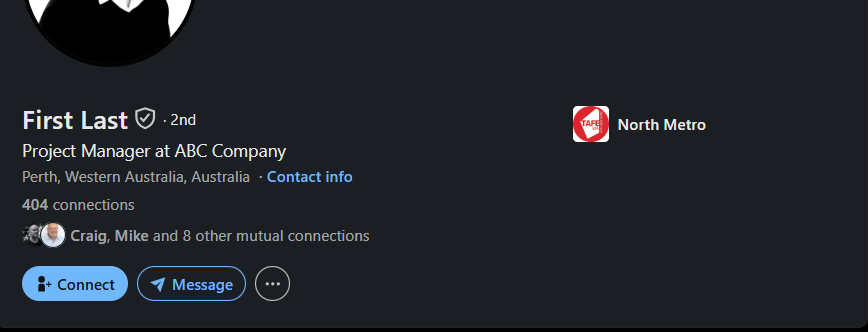
This one's straightforward.
What do you do for work? What's your official position at work. That's what you'll place here.
For example, if you're a Project Manager, that's exactly what you'll put as your LinkedIn title.
Now, some companies have different naming conventions for job titles, like Manager of Projects or Manager - Projects. You should stick with Project Manager, as that is what most people will search for.
Some people like to extend their job titles into something like: Project Manager | Underground Mining. And that's fine. Adding in your specific remit can help you get found by people searching for those terms.
The best advice here is to keep it simple. The rest of your LinkedIn profile can be used to expand on what you do.
LinkedIn keywords
Without keywords in your profile, you're technically invisible. Keywords? The words that employers and recruiters put into LinkedIn’s search function to find suitable candidates.
Which keywords are we talking about? Well, whatever's relevant to your role.
Think about what you do. Are there different names or terms for this? Are there any slang terms or acronyms? Be sure to include all of these in your profile. The more you include, the easier it will be to find you.
For example, a recruiter might search “FIFO Electrician WA,” or “Senior Geologist, 2:1 roster.” If those words aren’t in your profile, you simply won’t appear.
Don’t limit keywords to terms you prefer, as you won't appear in some recruiter’s searches.
Remember: Even if you’re not actively searching for a new job, potential employers with great opportunities could be searching for people with your exact skills and experience at any given time.
If they can’t find you, you could be missing out on a career-defining opportunity.
RELATED: How to impress recruiters with your LinkedIn profile
Have a strong biography
A LinkedIn biography is like a cover letter that goes with your resume. It may not be the first thing a recruiter or employer reads, but if your resume piques their interest and they go on to read your LinkedIn bio, it could make all the difference.
It's also useful to write an engaging bio as it will appear in Google and Bing searches.
For best results, you should cover:
- Who you are
- What you've done (include results where you can)
- What you can do / offer
Most importantly, let your personality shine through.
Yes, LinkedIn is seen as a professional platform, but we're all human. Expressing your personal interests helps you to connect with your prospective employers before you’ve met.
Use appropriate images
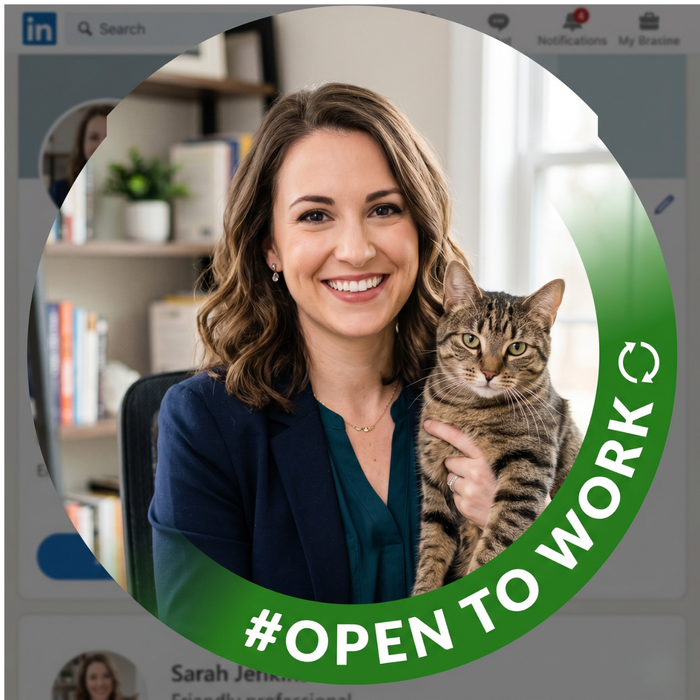
While your biography is where you can cleverly weave in your personal interests, your profile image is not.
LinkedIn profile images should be a headshot. It doesn’t have to be a business photo, but it does have to make you appear professional.
There should be no one else in the picture, no sunglasses and no pets (unless you're a vet or work with animals). The background picture is where you can show a little more personality.
Just make sure your LinkedIn headshot looks visually appealing.
Your LinkedIn banner image is another opportunity to stand out. Just make sure it’s sized correctly (LinkedIn’s recommended banner size is 1584 x 396 pixels) and visually clean.
There's also another option you can take advantage of. It's called the LinkedIn Open To Work banner. This is something you can switch on and off in your profile.
If you're open to a new job, our advice is to switch it on, as it can alert recruiters that you're open to a chat.
Note: Some employers have access to a tool called LinkedIn Recruiter. When you show you are open to work, you appear within their LinkedIn Recruiter searches, so it makes sense to use it.
Punchy position profiles
As long as you have your keywords, the job profile section does not need to be a full-page report on your daily tasks. Keep it short and punchy. Include a short sentence on the scope of your role and then a few bullet points on your main responsibilities.
Then include bullet points with your key achievements in each role.
Example:
Instead of: “Responsible for maintenance tasks”
Try: “Reduced equipment downtime by 18% between January and November 2025.”
RELATED: The dos and don’ts of social media for jobseekers
Write and share thoughtful content
A strong profile helps you get found. LinkedIn posts help you stay visible.
Sharing short updates about your work, site experiences, or lessons learned shows people you’re active and engaged in your industry.
You don’t need to overthink it or worry too much about the best time to post on LinkedIn. Consistency matters more than timing.
Even one post a week can increase your visibility far more than a profile that sits untouched.
LinkedIn Learning
One of the easiest ways to strengthen your profile is through LinkedIn Learning.
There are free and low-cost courses covering everything from safety certifications to leadership skills. A simple rule of thumb.... When you complete a course, share it with your network.
Posting about what you’ve learned, or adding it to your profile, shows employers you’re actively building your skills, not standing still.
Get active with groups
LinkedIn is ultimately a networking tool, so it is not just recruiters and hiring managers that should be using the platform to network.
Joining groups in your industry not only keeps you up to date on news and happenings in your space. When you comment on an article or post, it also boosts your profile views exponentially, increasing your chances of being found by the right person.
Your next role might already be searching for you. Make sure you’re easy to find when it does.
We hope this article gives you enough ideas on how to create a good LinkedIn profile. For more tips and useful resources, head to the MPI career advice page.
If you’re looking for your next opportunity or want to chat to mining recruitment experts about what is really happening in the industry, register with MPI.

Related articles

The dos and don’ts of social media for mining jobseekers
-
MPi Life
-
Career advice

How to decide if a job offer aligns with your career path
-
Personal Development
-
Mining News
-
Career advice
The dos and don’ts of social media for mining jobseekers
- MPi Life
- Career advice
How to decide if a job offer aligns with your career path
- Personal Development
- Mining News
- Career advice